Turn your research into software. A tool that visualizes your data, a model of the system you study, an assistant that speeds up your lit review.
Fall 2026 cohort · Kicks off Monday, September 14
The Vibe Coding Studio
Twenty-eight people shipped something real this summer, most of whom had never written software. Four sessions on building with AI, drawn from my classroom at Carnegie Mellon, then four Monday nights to get one of your own online.
Welcome back 👋
You come in with an idea. You leave with a working project.
Finally make the thing you've wanted to play with. A game, a generative-art piece, an app for a hobby.
Ship the idea you've been sitting on. An MVP for your startup, an internal tool that kills a spreadsheet, a site that actually does something.
The four sessions
All four sessions have aired and are recorded in full, so you can start anytime. Open a session below for the recording, a recap, and materials to go deeper. Session 1 is free and open to everyone.
Session 1: Fundamentals What AI actually is Free & open
What AI actually is, from neurons to LLMs (and why it sometimes confidently lies to you).
Lesson recap
Before we build anything together, I want you to understand what we’re building on. So we spent our first session on the whole story of artificial intelligence, from a single model neuron in 1943 to the large language models you’ll soon be vibe coding with. There is no exam and no heavy math here. The goal is to give you the ideas that matter, at the highest level I can manage without insulting your intelligence.
It’s worth knowing where the term even comes from. “Vibe coding” is only about eighteen months old. It began with a single tweet from Andrej Karpathy, a co-founder of OpenAI, describing a looser way of building: go with the flow, hand your errors straight back to the AI, and stop reading every line of code. Rick Rubin later reframed the same idea as something close to a meditation. That spirit is exactly what I want for this studio. We are here to make something joyful that you couldn’t have made before, and we get there by first understanding the machine that makes it possible.
It all begins with a single neuron. Your brain runs on roughly 86 billion of them, each connected to about a thousand neighbors, constantly passing signals along. In 1943, Warren McCulloch and Walter Pitts captured that idea in the first mathematical model of a neuron: take a set of inputs, weight each one, add them together, and fire only if the total clears a threshold. With fixed weights, a neuron like this can already express simple logic such as AND and OR. What it cannot do is learn.
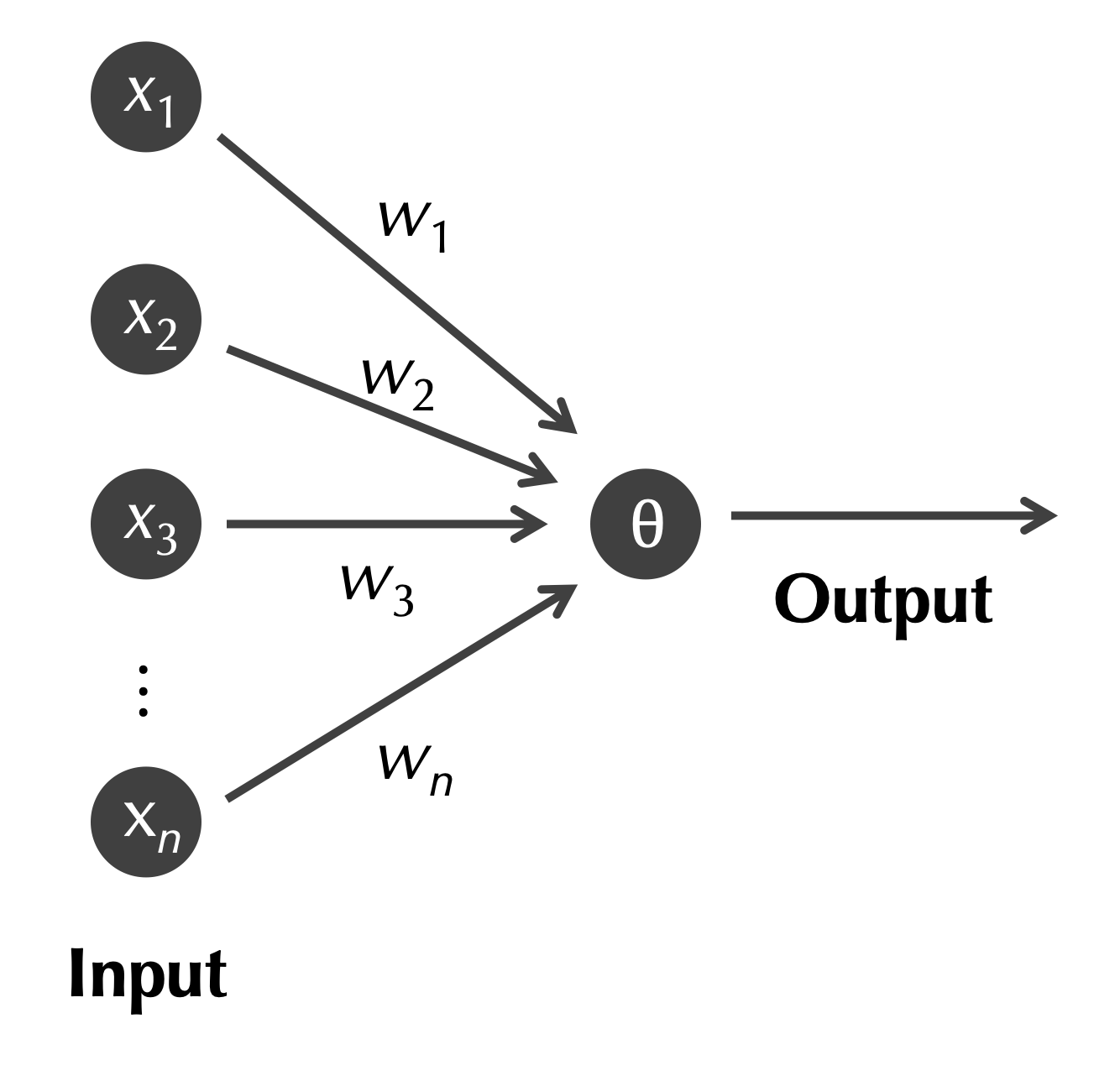
That limitation is exactly what Frank Rosenblatt set out to fix. In the late 1950s he designed the perceptron, a neuron whose weights could be tuned from examples rather than set by hand. It was the first machine that genuinely learned from data, and the reaction was extraordinary. In 1958 the New York Times reported that the Navy had a machine that would soon walk, talk, see, write, and be conscious of its own existence. It was the first great overreaction in the history of AI, and it would not be the last.
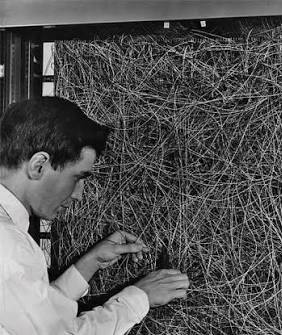
Then came the first serious setback. Marvin Minsky pointed out that a single perceptron cannot represent something as simple as exclusive-or, the idea of “one or the other, but not both,” because no single straight line cleanly separates the cases. The answer was to stop relying on one neuron and instead connect many of them into a network, with hidden layers in the middle, a tunable bias, and a smooth activation function in place of a hard on-or-off switch. That gives you the building block of every modern neural network. There was just one problem: no one knew how to train a large network, and the computers of the era were far too weak to try. The field cooled into what we now call the AI winter.
So what does it actually mean to train a network? I like to ground the idea in a true story. One afternoon my office phone rang, which almost never happens to a professor, and on the line was a local dermatologist. He wanted to know whether a computer could look at a photo of a skin lesion and tell whether it was cancerous. As it happened, a network had just done exactly that, and it outperformed the doctors.

The mechanism is simpler than it sounds. You feed the image in as raw pixel values, and you want the correct answer to light up at the other end. You then measure the error, which is just how far the network’s guess sits from the truth across thousands of labeled examples, and you adjust the weights to push that error down. Training is nothing more than turning all of those dials until the error becomes small.
The natural question is how you turn millions of dials at once. The intuition I like is a droid dropped onto an unfamiliar planet, searching for the warmest spot by always taking a step in the steepest uphill direction. That is gradient descent.
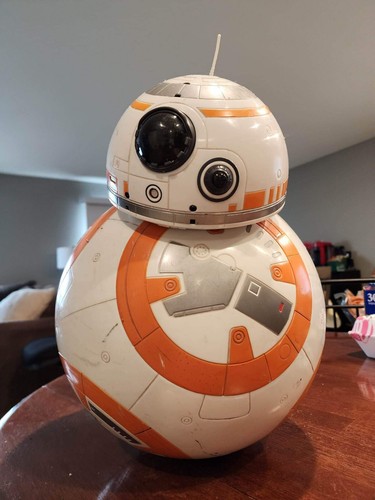
The breakthrough that made this work at scale is called backpropagation. You start at the answer and work backward through the network, using nothing more exotic than the chain rule from calculus to determine exactly how much each weight contributed to the error. It is, honestly, the one moment where calculus earns its keep.
Even with backpropagation, progress stalled, because two ingredients were still missing: enough computing power and enough data. The computing power arrived with GPUs and parallelism, which is the reason Nvidia is now among the most valuable companies in the world. The data arrived with ImageNet, a collection of millions of hand-labeled images.
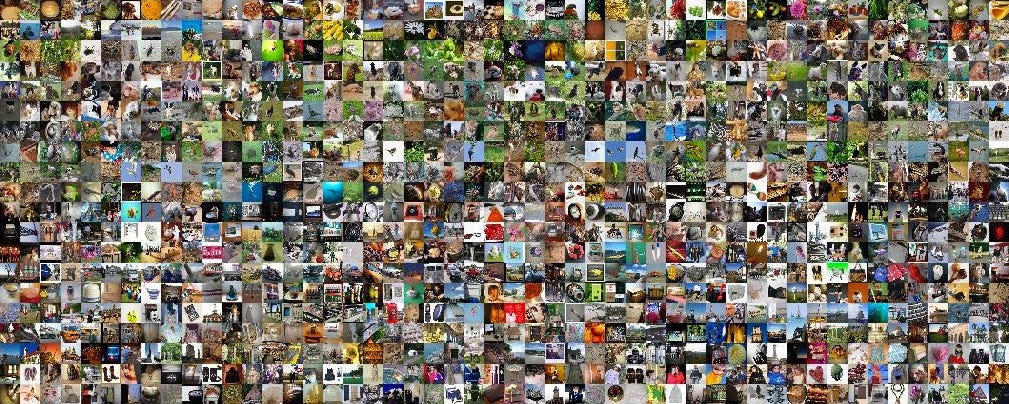
Suddenly networks could reliably recognize a cat in a photograph. And as it turned out, images were the easy part. Language is much harder. A single word can carry hundreds of meanings depending on context, the final sentence of a novel can change how you read its first, and you can effortlessly understand a sentence that no one has ever spoken before. Teaching a machine to handle all of that is a far deeper problem than labeling pictures.
The breakthrough came in 2017, in a paper with one of the best titles in the field: “Attention Is All You Need.” It reframed the entire problem as a single question. Given everything written so far, what is the most likely next word? Solve that well enough, and quickly enough, and you produce a remarkably convincing impression of intelligence. That is fundamentally what a large language model is: an enormous neural network, with GPT-4 reportedly carrying around 1.8 trillion weights, trained on a vast slice of the internet and then refined with human feedback so that its answers come out helpful rather than merely likely. Because the whole process is probabilistic, with no notion of truth built in, it will sometimes state something false with complete confidence. That is what we mean by a hallucination.
Here is where everything comes together. Your prompt is broken into tokens, each token is turned into a vector, and those vectors are handed to a committee of attention heads that each see part of the model and vote on the next word. Everything the model can hold in mind at once is its context window, and the leap from a few hundred tokens to more than a million is most of the reason today’s AI feels genuinely capable. It is also the reason vibe coding is possible at all.
We are standing on roughly eighty years of demanding technical work, and the remarkable thing is that you can now pick all of it up and build something real. Next time, we put it to use, and I show you how to make a language model actually help you learn. See you then. 🫶
Go deeper
- Andrej Karpathy's original "vibe coding" tweet (Feb 2025) The one tweet that named the whole idea.
- Rick Rubin: The Way of Code Vibe coding as Taoist meditation. Where the studio's mood comes from.
- 3Blue1Brown: Neural Networks (video series) The friendliest visual tour of neurons, gradient descent, and backprop.
- "Attention Is All You Need" (Vaswani et al., 2017) The paper that introduced the transformer and made modern LLMs possible.
- Dermatologist-level classification of skin cancer (Esteva et al., Nature 2017) The skin-lesion network that beat the doctors.
- ImageNet Classification with Deep CNNs (Krizhevsky, Sutskever, Hinton, 2012) AlexNet, the moment compute and data made deep learning work.
- Perceptrons (Minsky & Papert, 1969) The XOR critique that cooled the field for a decade.
- ELIZA, and why people fell for it (Weizenbaum, 1966) The original chatbot, and the original case of humans over-trusting one.
Session 2: Growing your (first) brain Learning with AI, not around it Members only
Let AI do all the thinking and your own brain atrophies. Here's how to use it so you learn more, not less.
Session 3: Growing your (second) brain Setting up your AI stack Members only
Build an AI stack that gets smarter with every interaction — and sets you up to build something amazing.
Session 4: Vibe coding Putting the stack to work Members only
Take everything and execute: the full vibe-coding loop, from an idea to a working thing you're proud of.
After the sessions: Studio Hours
The first cohort wrapped up in August with 28 shipped projects; 23 of them are in the gallery below. The fall cohort kicks off Monday, September 14. All four sessions are already recorded and waiting, so you can start the day you join and watch ahead if you want. Then come four Monday nights at 7:30pm ET, and each one has one thing due.
Mon, Sept 21
What are you building?
Bring the idea. It doesn't have to be good yet, and it's allowed to change later.
Mon, Sept 28
It's online at a real link
Even if it's nearly empty. Deployment comes early on purpose: getting a placeholder online in week two is what buys back the week that setup usually eats.
Mon, Oct 5
The core thing works
The one feature your project is actually about does what it's supposed to do.
Mon, Oct 12
Demo-ready
Something you could put on a screen and walk somebody through.
Studio Hours are open drop-in and they aren't recorded, so cameras off is fine. The deliverable is the theme, so there's nothing to prepare. Nothing is graded and nothing is late.
Fri, Oct 16
Ship it Submit a live link anyone can open, plus a short description. Ship it and you've earned the Certificate of Completion.
Mon, Oct 19
The showcase The cohort meets on Zoom to show what it built. Presenting is optional: five minutes, screen-share only, pseudonyms welcome. If you present, your certificate comes with Distinction. There's no judging.
The build lives in our members-only Discord, with help from The Producer, our studio bot. It keeps the project directory and posts the Friday digest.
Built in the Studio
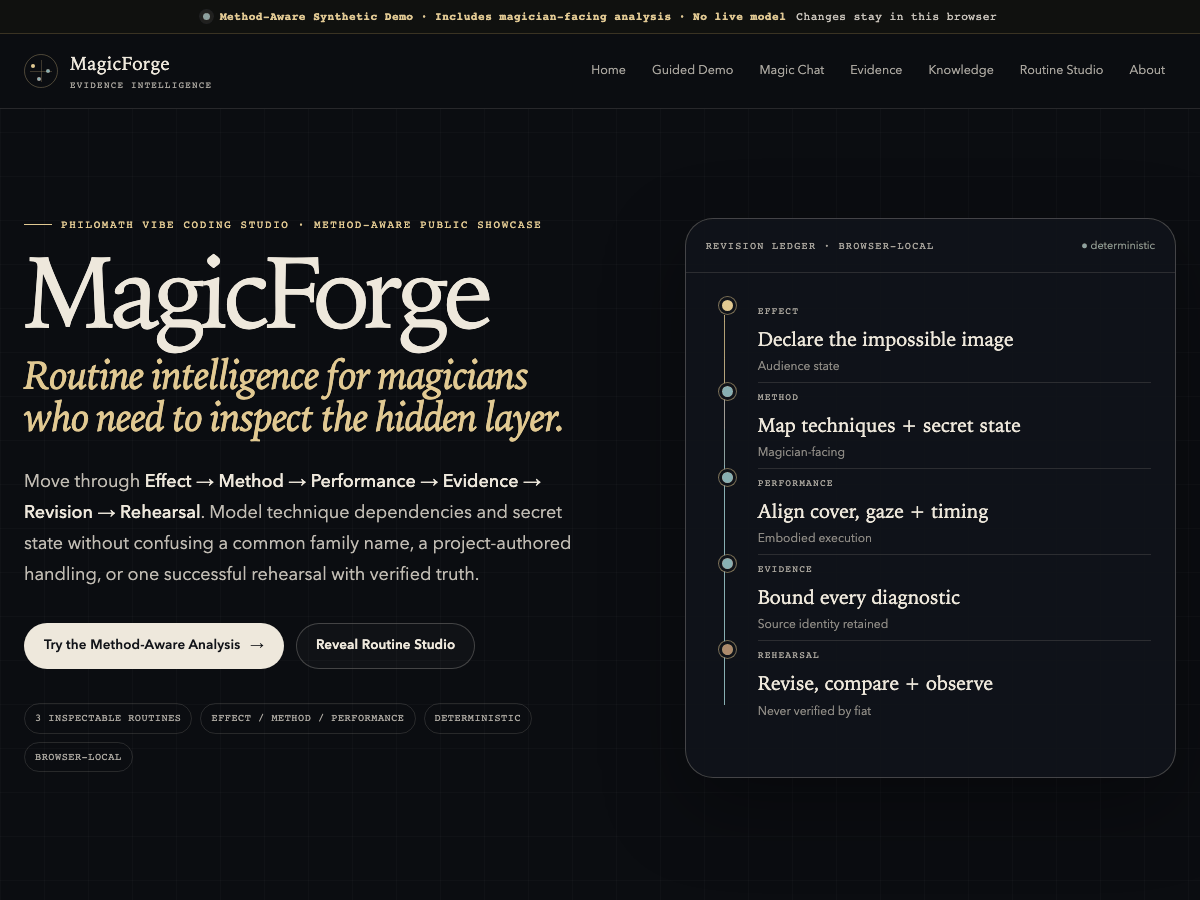
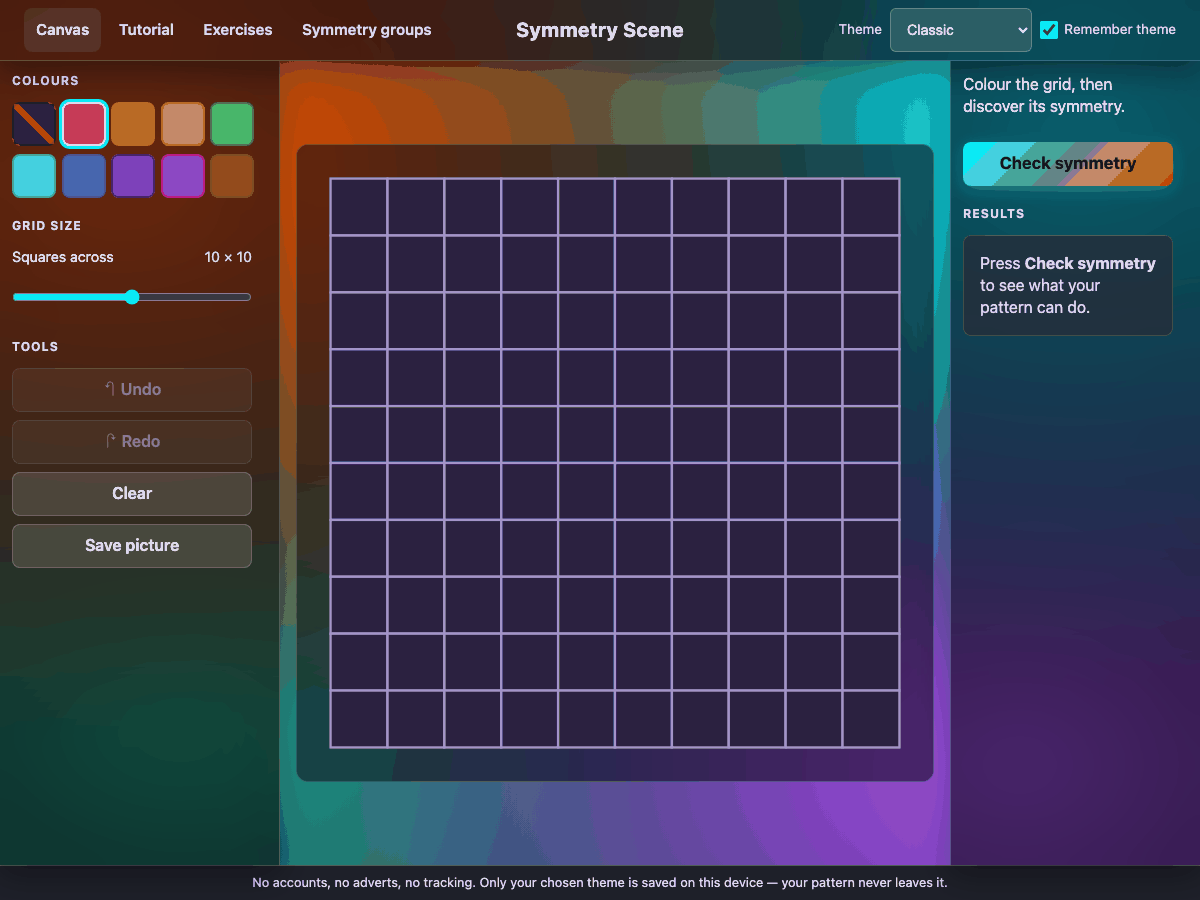
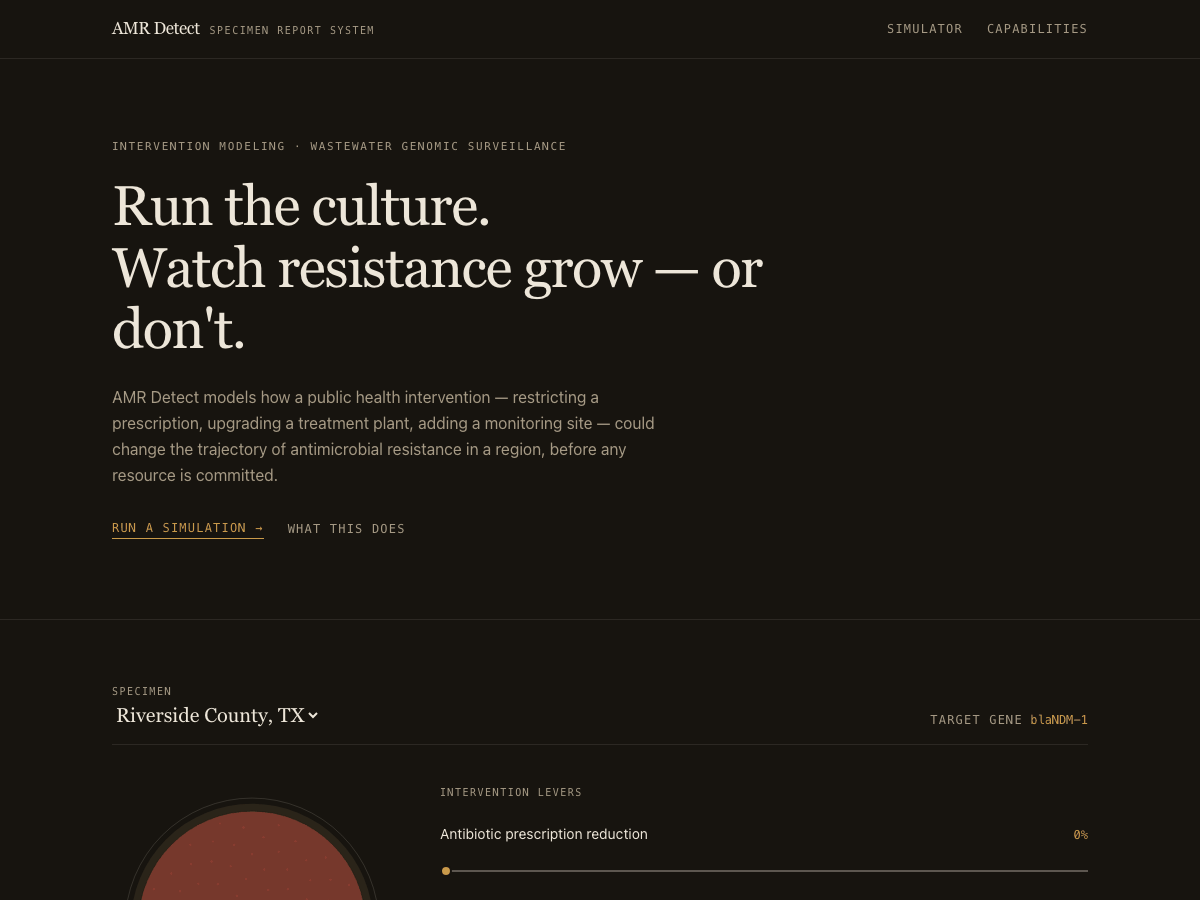
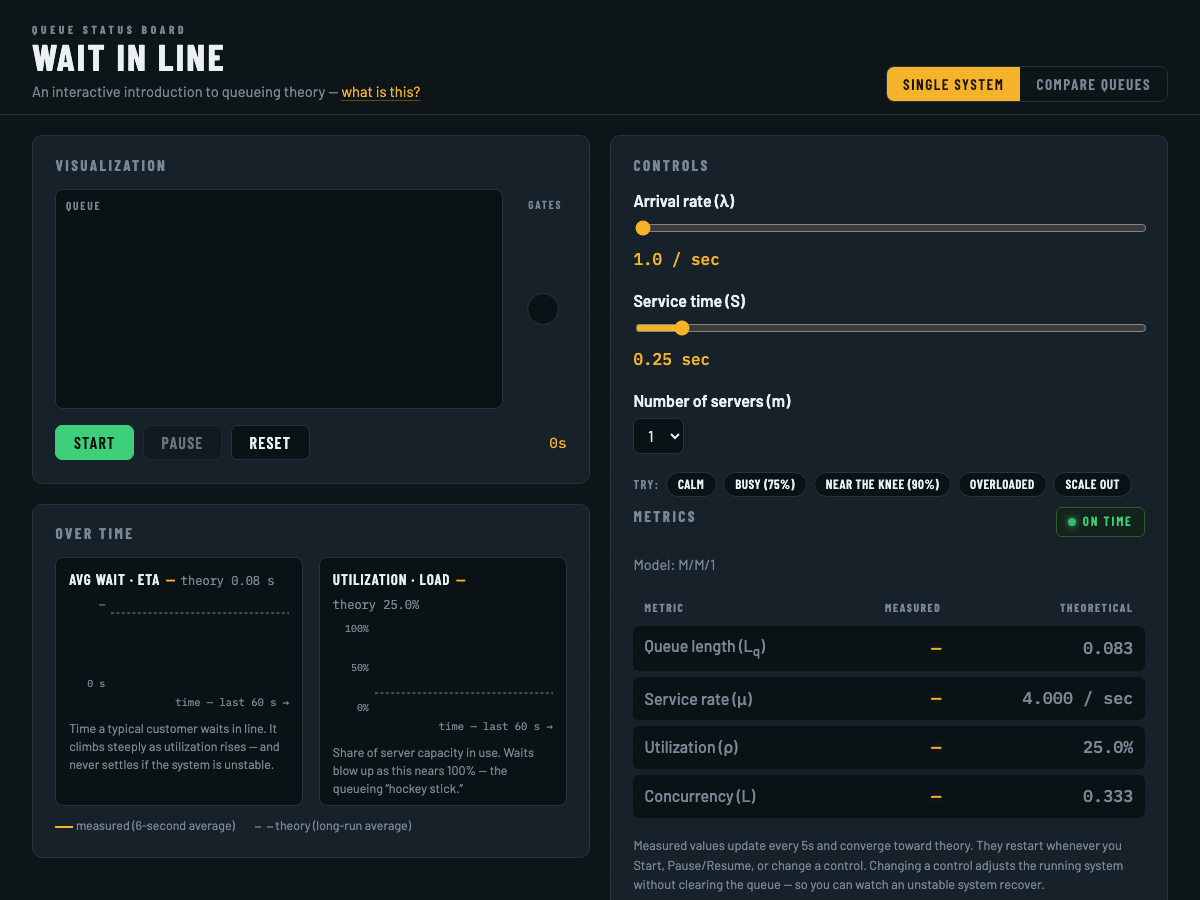
Vibe Coding Studio learners have built 23 projects so far, most by people who have never worked with software. Starred projects presented as part of our showcase. Check them out below.

One membership unlocks it all.
Monthly
$6.95/month
- Live Studio lectures, recorded for members
- Course companion e-books
- Member Discord
6 Months
$29.95/ 6 months
- Everything in Monthly
- Full Vibe Coding Studio cohort access
- Bring your own project, earn a certificate
- Programming for Lovers project cohorts
Best value Annual
$49.95/year
- Everything in the 6-Month plan
- A full year of access
- Best price, billed yearly
Secure checkout through Memberful. Cancel anytime, and everything unlocks the moment you join.